
Summary: The best conflict management practice for healthcare clinics in Seward involves evaluating the clinic's escalation routine before considering pay, schedule, and mission statements. Clinicians should seek clear answers on who handles conflicts, what gets documented, when they are protected from being the sole messenger, and how repeated conflicts are reviewed. This understanding helps clinicians choose workplaces that align with their professional values and ensure a supportive work environment.
Across the 99 rated listings in our directory, the median rated listing has 36 reviews, which means half of those 99 sit below that public record. A conflict that begins with a schedule dispute, a family complaint, or a handoff problem can follow a clinician into reviews, references, and the mood on a shift. These disputes can spread fast, and the clinic's name is not the only thing that takes a hit. Staff morale does too. Handling the issue early matters for a steadier work setting and for patient satisfaction. For licensed clinicians comparing jobs in and around Seward, the best conflict management practice is to check the clinic's escalation routine before pay, schedule, and mission statements take over the conversation. A good answer says who steps in, what gets documented, when the clinician is protected from being the only messenger, and how repeat conflicts are reviewed. Knowing that process helps clinicians judge the job more clearly and pick a place that fits their professional values and personal comfort.
The providers below are not ranked as employers by culture or care quality, because the supplied facts do not support that. The list gives job seekers a setting-by-setting way to ask sharper conflict questions before applying or accepting an interview. Each setting brings its own problems and its own advantages, and the right questions help clinicians sort through them before they commit.
1. Seward Community Health Center: best for front-door conflict screening
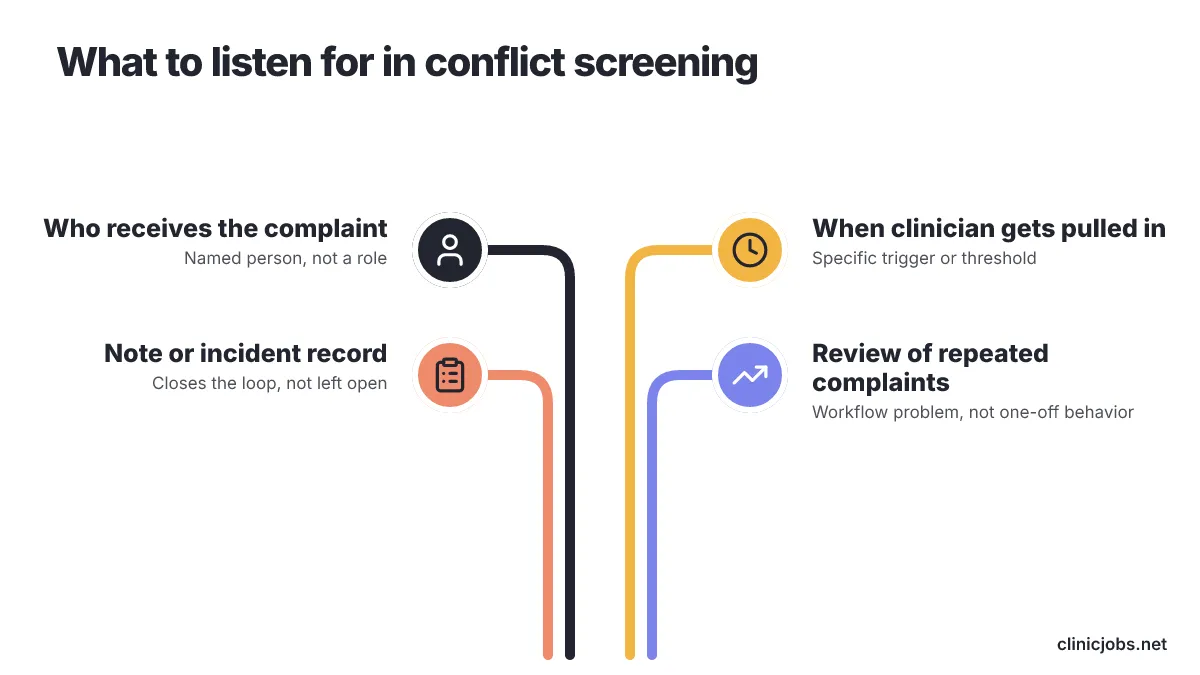
Seward Community Health Center is listed in Seward, and its name makes it the right place to ask how patient-facing conflict is handled at the first point of contact. A clinician considering a community health setting should ask whether complaints about appointments, forms, wait times, or care instructions stay at reception, move to a nurse, or go straight to a manager. That first exchange can shape the whole patient visit, so the clinic's response matters. A licensed clinician should listen for a repeatable handoff, not a personality answer. A useful response names the person who receives the complaint, the point when the clinician gets pulled in, and the note or incident record that closes the loop. The next question is whether staff review repeated complaints as a workflow problem rather than treating every tense encounter as a one-off behavior issue. That kind of review catches patterns that deserve attention.
2. Solace Patient Advocacy: best for advocacy-related escalation questions
Solace Patient Advocacy is listed in Seward, and a patient advocacy setting calls for a different conflict screen than a standard clinic role. A clinician should ask how the organization separates advocacy support from clinical decision-making when a patient, family member, or care team disagrees about the next step. The answer should show how patient concerns get heard without putting clinical judgment at risk.
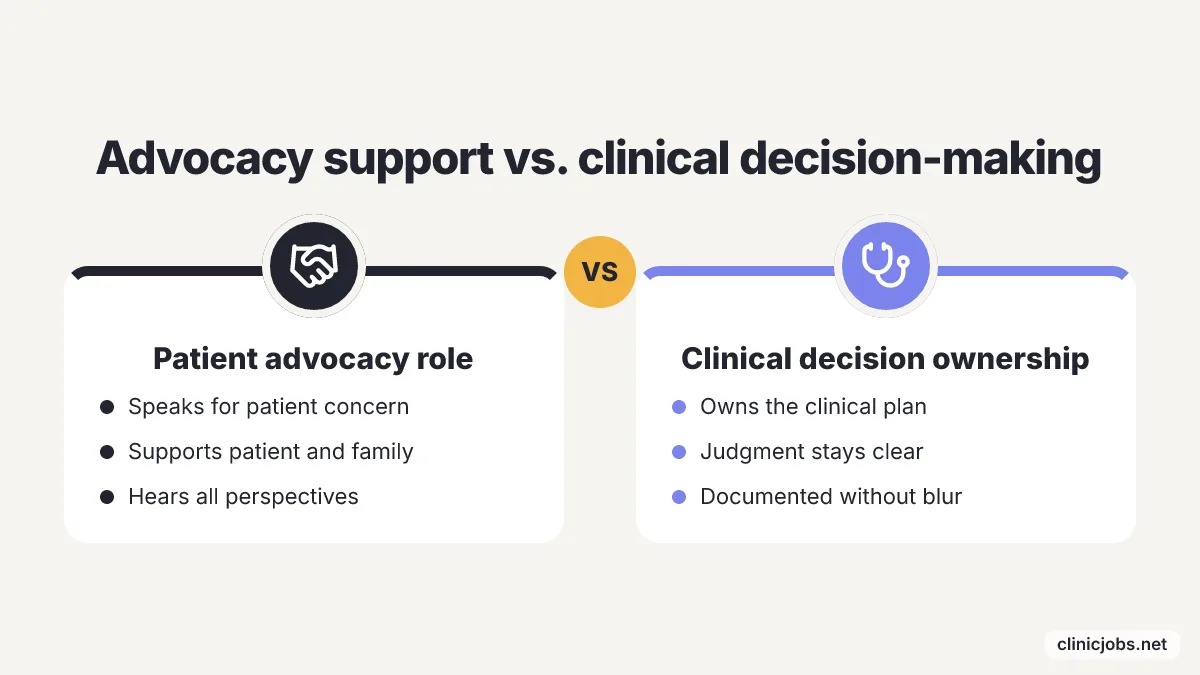
A job seeker should press for boundaries in the answer. A solid process explains who speaks for the patient's concern, who owns the clinical plan, and how disagreements get documented without turning the clinician into the only person defending a decision. The practical risk in advocacy work is not the presence of conflict. It is role blur, especially when a patient needs support and the care team still needs a clear decision path. Clear boundaries and defined roles keep the process from drifting.
3. Chugachmiut NorthStar Health Clinic: best for access and follow-up questions
Chugachmiut NorthStar Health Clinic is listed in Seward. In the interview, aim your conflict questions at patient access, callback work, and who owns a problem after the appointment is over. Ask what happens when a patient calls back upset because the prescription never reached the pharmacy, the referral packet stalled, or nobody answered a message from two days earlier. That answer shows whether the office has a steady way to keep care moving and keep patients from feeling brushed off.
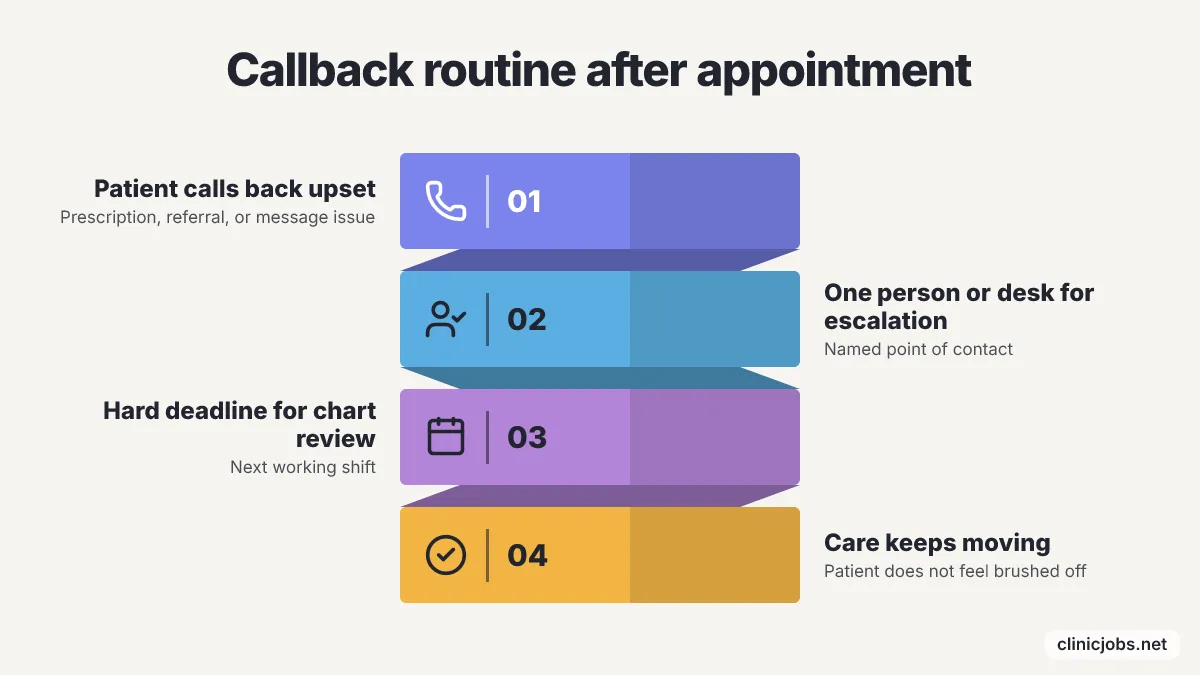
A good clinic points to one person or one desk for escalations, plus a hard deadline for reviewing the chart on the next working shift. In a messy setup, staff shrug and expect you to sort out loose ends at home after your day has already ended. Nurse practitioners, staff RNs, physician assistants, doctors, and allied health staff run into this all the time. If no one is named on paper, those open-ended requests keep landing back on your desk. A clear callback routine keeps one clinician from drowning in paperwork.
4. Providence Seward Medical Center: best for formal chain-of-command screening
Providence Seward Medical Center is listed in Seward, and any medical center setting needs straight questions about supervisory hierarchy. Ask who steps in when friction breaks out on the floor during midday rounds, who takes over after the night shift starts, and what happens when the disagreement crosses departments with separate managers. Knowing who makes the call cuts down confusion during emergencies. Bigger institutions do not handle conflict better just because their handbooks are longer. A rigid hierarchy helps when supervisors step in fast. It can also stall completely if every supervisor assumes somebody else in another office will act. Listen for practical steps in the answer. They should name the current charge nurse, trace the path to the unit director, and describe the incident report that keeps the facts in place instead of letting the dispute drift into break-room gossip.
5. Alaska Native Tribal Health Consortium Seward Office: best for cross-organization handoff questions
Alaska Native Tribal Health Consortium Seward Office is listed in Seward. Working in a clinic tied to a larger consortium brings its own friction, mostly around patient transfers. Ask who has final decision authority when an issue sits between the local outpost, an offsite clinical group, and a separate administrative board. That tells you whether administrative borders will get in the way of clinical care.
A working partnership keeps patients from being bounced between phone numbers. Ask the interviewer to walk through a recent grievance from the first call to the final resolution, and ask who tells the family what happened, consistent with AHRQ's 2016 CANDOR approach to communication and optimal resolution. If they cannot give you that path, you will spend your own clinical hours patching administrative seams between groups that do not talk to each other. A joint workflow protects your time and your patients.
6. Seward Mountain Haven Long-Term Care: best for recurring family-concern screening
Seward Mountain Haven Long-Term Care is listed in Seward. In long-term care, disagreements do not end after one short conversation. Ask the hiring team how they handle repeated complaints from families, residents, and nursing staff when the same dispute follows the day crew onto the night shift. Extended residential care runs on long-term relationships, so these tensions hang around if staff lack a coordinated response. Their answer should mention scheduled care conferences, one assigned decision maker, and a practical way to separate real medical changes from personal routine preferences. Floor nurses, physical therapists, assistants, and allied health professionals need administration behind them during tense family meetings. Otherwise, you wind up repeating the same speech every morning while your clinical rounds wait. The strongest systems stay steady even when the primary nurse leaves, and staff get the backing they need to answer complaints quickly.
How should a clinician choose among Seward clinic settings?
A clinician ought to weigh conflict routines as seriously as pay, license fit, and the shape of the schedule. If a clinic cannot describe escalation in an interview, staff are left to improvise when pressure hits. That improvisation usually lands on whoever is standing closest to the patient. Burnout follows, along with lower job satisfaction, so the clinic's conflict process matters.
A practical screen starts with the same questions at every organization:
- Who gets the first report when a patient or family member is upset?
- When does the clinician step in, and when does a manager step in first?
- Where is the conflict written down so the next shift does not start from zero?
- Who looks at repeat complaints for a workflow problem?
- How does the clinic handle disagreement between clinical judgment and patient preference?
A job seeker should ask for a real example, not a string of culture words. Patient details are not needed, but the answer should name the role that made the decision and the role that spoke with the patient. If a clinic answers only with values, teamwork, or respect, it has not shown the habit that will protect staff on a tense day. Clinic Jobs is a curated job board for clinic and healthcare careers across the U.S., sorted by state and specialty. For clinicians comparing physician jobs, registered nurse jobs, nurse practitioner jobs, medical assistant jobs, therapist and counselor jobs, physical therapist jobs, and other clinic roles, the posting is only the starting point for conflict screening. This platform can help people read the differences between clinic settings more clearly.
DDS Collective serves a different purpose for dental clinicians. It is a reference point for dentistry, with one collective and four products, a tech-advanced GPO, dental clinical hiring, advisor to tech startups of oral health, and venture backing for oral-health founders. A dental applicant can use the same conflict questions, but should shape them around practice ownership, chairside roles, and dental clinical hiring talks. That makes the search more specific to the job in front of them.
A manual conflict process is fine in a small team when one manager owns escalation and staff write down the outcome before the next shift. Software, committees, and long policy binders do not fix a clinic where nobody knows who speaks to the patient or who backs the clinician. The process stays simple, and that only works when leaders repeat it every time, even for complaints that seem minor. Clear communication matters here.
A clinician should not use an interview conflict screen for an immediate safety threat. Safety threats call for the employer's emergency or workplace safety procedure, not a talk about service recovery, documentation habits, or team communication style. Safety protocols need to be in place and understood if the work site is going to stay safe, a priority reflected in CDC/NIOSH's 2024 bulletin on prioritizing healthcare workers.
A final choice should come from fit between license, setting, and conflict exposure. A clinician who dislikes repeated family conferences may not do well in long-term care, while a clinician who wants formal escalation may prefer a medical center setting over a smaller office. Someone who wants close patient advocacy should ask sharper questions about boundaries, decision ownership, and documentation.
Conclusion
Begin with the setting that matches your license and the conflicts you are willing to deal with again and again. Before you apply, pick the Seward listing that fits the workday you want, then ask the same escalation questions in the first talk with a recruiter, manager, or practice contact. That gives you a clearer read on the workplace and helps you choose a setting that fits your professional values and your comfort level.
The aim is not a clinic with zero conflict. The aim is a workplace where staff know who steps in, what gets written down, and how repeat problems get fixed, consistent with AHRQ's 2025 guidance on responding to patient safety events. Once an employer answers those questions plainly, the next choice comes down to ordinary job factors: scope, schedule, pay, commute, licensure fit, and whether the role still feels like work you want to do. When conflict management is handled well, clinicians can find a work setting that supports their professional growth and personal well-being.
Frequently Asked Questions
What is the best conflict management practice for healthcare clinics in Seward?
The best conflict management practice involves evaluating the clinic's escalation routine before considering pay, schedule, and mission statements. Clinicians should seek clear answers on who handles conflicts, what gets documented, when they are protected from being the sole messenger, and how repeated conflicts are reviewed.
How does Seward Community Health Center handle patient-facing conflicts?
Seward Community Health Center focuses on how patient-facing conflicts are handled at the first point of contact. Clinicians should ask whether complaints about appointments, forms, wait times, or care instructions stay at reception, move to a nurse, or go straight to a manager. A repeatable handoff process is crucial.
What should clinicians ask about conflict management at Solace Patient Advocacy?
Clinicians should ask how the organization separates advocacy support from clinical decision-making when disagreements arise. The answer should clarify who speaks for the patient's concern, who owns the clinical plan, and how disagreements are documented without placing the clinician in a defensive position.
How does Chugachmiut NorthStar Health Clinic manage patient callbacks and follow-ups?
Clinicians should inquire about the process for managing patient callbacks and follow-ups, such as what happens when a prescription doesn't reach the pharmacy or a referral packet stalls. A good clinic has a designated person or desk for escalations and a hard deadline for reviewing the chart on the next working shift.
What conflict management questions should be asked at Providence Seward Medical Center?
Clinicians should ask about the supervisory hierarchy, such as who steps in during conflicts on the floor, who takes over after the night shift starts, and what happens when disagreements cross departments. Practical steps should be outlined, naming the current charge nurse and tracing the path to the unit director.